Social Credit News

Oliver Heydorn

Oliver Heydorn

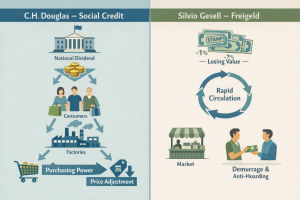
Silvio Gesell believed that the two great economic evils were stagnation and inequality. He attributed stagnation to hoarding (the “retention” of money that slows circulation) and inequality to both hoarding and the payment of interest on money. His remedies were therefore twofold: demurrage (a carrying charge that makes money lose value if held, forcing it into rapid circulation) and interest-free credit.

     From a Douglas Social Credit standpoint, Gesell’s take on monetary reform rests on a fundamentally flawed diagnosis and thus the remedies he proscribes are inadequate, in addition to being coercive and counterproductive.

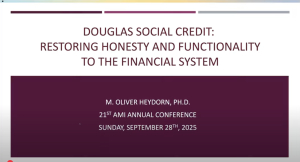
Dr. Oliver Heydorn, founder of the Clifford Hugh Douglas Institute for the Study and Promotion of Social Credit, introduces Douglas Social Credit as a comprehensive monetary reform model that addresses both justice and functionality in the financial system: "Douglas Social Credit: Restoring Honesty and Functionality to the Financial System".

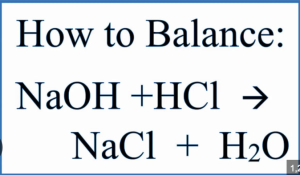
Geoffrey Dobbs’ chemical metaphor casts a brilliant light on Douglas’s Social Credit, revealing that the debt-money system is, in conjunction with an unbalanced price system, an acidic force—corrosive, unstable, and conflict-inducing. Social Credit, by contrast, provides the base money that neutralizes this acidity, infusing the economy with debt-free purchasing power (OH⁻) to balance the H⁺ of debt-laden prices. The National Credit Authority, as the economy’s alchemist, orchestrates this equilibrium, ensuring financial flows mirror real production.

In The Monopoly of Credit (1931), C.H. Douglas presents his second proof for the A+B theorem, arguing that the two core accountancy cycles of an industrial economy: the creation and destruction of money (Cycle 1) and the creation and liquidation of costs (Cycle 2) are misaligned, resulting in a systemic deficiency in purchasing power. The money cycle (Cycle 1) operates at a faster pace than the cost creation and liquidation cycle (Cycle 2), creating a gap between prices and purchasing power that widens with greater dyssynchrony and narrows with greater synchrony. Indeed, if the cycles were perfectly aligned, money creation/spending and cost creation/liquidation would occur simultaneously, eliminating the gap entirely.


[1] C.H. Douglas, The Monopoly of Credit 4th edition (Sudbury, England: Bloomfield Books, 1979), 46-50.

Latest Articles

  • Debt Finance and the Apocalyptic Propensity
    "Given the foregoing analysis, one may well be inclined to think that at least a fewapocalyptic narratives are deliberate psychological operations designed to demoralize,terrorize and ultimately subjugate the public. Nonetheless, they cater to a genuinepsychological need - the need for an explanation for the sense of foreboding and uneasethat so many feel. Thus, in order to drive these doomsday dogmas out of the minds ofmen, it is not sufficient to simply expose and discredit them: it is necessary to constructan alternative narrative that meets the psychological need, but also provides somethingthey cannot: hope.""It is here that Douglas Social Credit becomes invaluable as the Trinitarian solutionthat explains our predicament, exposes the apocalyptic narratives and expounds analternative worthy of a species whose members are meant for more than to merely live infear and die in pain." Read the full article in the attachment below.
    Written on Monday, 06 April 2026 11:37 Read more...
  • The Accounting of Abundance: A Structural Critique of Inflationary Theory
    Mainstream economic thought treats inflation as a phenomenon of monetary volume—the "Too Much Money" paradigm. However, by applying the engineering logic of C.H. Douglas’s A+B Theorem, we can deduce that inflation is not primarily a result of consumer behaviour, but a mathematical consequence of debt-based cost accounting in an industrial society.
    Written on Saturday, 14 February 2026 12:56 Read more...
  • A Douglas Social Credit Critique of Gesell’s Monetary Analysis and Proposals
    Silvio Gesell believed that the two great economic evils were stagnation and inequality. He attributed stagnation to hoarding (the “retention” of money that slows circulation) and inequality to both hoarding and the payment of interest on money. His remedies were therefore twofold: demurrage (a carrying charge that makes money lose value if held, forcing it into rapid circulation) and interest-free credit. From a Douglas Social Credit standpoint, Gesell’s take on monetary reform rests on a fundamentally flawed diagnosis and thus the remedies he proscribes are inadequate, in addition to being coercive and counterproductive.
    Written on Tuesday, 10 February 2026 14:00 Read more...